Oxygen Sensor Handling for Divers
This article separates two related but different uses of galvanic oxygen sensors: rebreather oxygen control and diving gas analysis. The same basic sensor chemistry is involved, but the handling, replacement interval, and risk profile are not the same.
Digital solid-state oxygen sensors used in some rebreather systems are a different technology from the analog galvanic oxygen sensors discussed in this article. The handling, characteristics, service life, and replacement rules are device-specific and the information in this article does not apply to solid-state oxygen sensors.
The oxygen sensors in analyzers and rebreathers are complex devices, but fundamentally it is useful to think of them as oxygen-powered fuel cells. They operate on a chemical reaction that produces a weak electrical current that can be measured in order to estimate the pressure of oxygen present. An oxygen sensor is an oxygen-powered generator consisting of a lead anode, a gold cathode, and a liquid electrolyte, typically mostly water with potassium hydroxide.
A great many environmental factors affect this chemical reaction, including pressure, temperature, humidity, and the presence of oxygen. Other factors are inherent in the manufacturing process itself, such as the purity and precise amounts of the chemicals. The chemical reaction began the moment the cell was assembled, continued at a slow pace while the new cell sat in the sealed bag, and accelerates when the bag is opened and the cell is exposed to normal atmosphere. Over time, enough of the chemicals are consumed by the reaction that the oxygen sensor becomes unreliable.
When a new oxygen sensor is removed from its sealed package, the millivolt output may take from a few minutes to several hours to stabilize as the sensor acclimates. For rebreather use, it is better to wait as long as practical before calibrating with a freshly opened sensor.
There is also a practical difference between diving-grade oxygen sensors and analyzer-grade oxygen sensors. Diving-grade sensors typically include a hydrophobic membrane on the face of the sensor to improve resistance to moisture. Analyzer-grade sensors may respond slightly faster, but they generally do not have the same moisture protection.
How rebreather divers use and maintain their oxygen sensors, and how divers analyzing their Nitrox mix use and maintain their oxygen sensors, are two different situations.
Rebreather Sensors Are Different
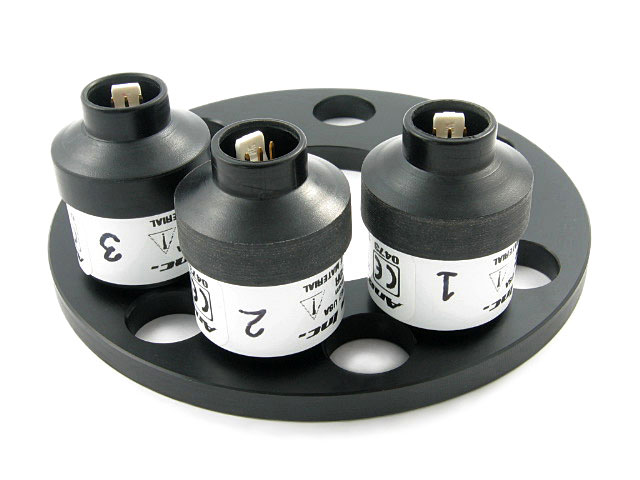
Cells used in rebreathers are exposed to pressures of oxygen much greater than normally encountered in analyzing gas. As they age they become increasingly non-linear, meaning they are accurate under some conditions and inaccurate under others. All sensors are extremely non-linear as they approach some maximum pressure of oxygen, a value known as the current limit, and this maximum also decreases as the sensor ages.
As sensors age, their response time to changes in oxygen pressure also gets slower. Becoming non-linear, current limited, or slow to respond in the range of oxygen pressures typically used by rebreather divers can have life-threatening consequences. There are a variety of replacement strategies, but nearly all rebreather manufacturers recommend periodic replacement long before these conditions begin to develop as a result of normal aging and typical use.
The widely accepted absolute maximum useful lifespan of oxygen sensors in rebreather applications is 18 months, and typically 12 months or less depending on usage and environmental factors. No manufacturer recommends doing things to sensors like vacuum packing, freezing, or storing in inert gas because improper handling can damage the sensor.
Replacement Discipline for Rebreather Sensors
In practical terms, a rebreather diver usually faces one of three sensor-management patterns:
- Install fresh new sensors in the rebreather and leave them there. At the end of 12 months, discard the good sensors and install new ones. In my opinion, and in line with manufacturer guidance, annual replacement is the best course of action to follow.
- Remove the sensors after each dive trip and use a favorite storage ritual to try to extend their life. The extra handling may leave the diver with a good sensor, or it may leave the diver with a sensor that has unknown or unpredictable behavior. At the end of twelve months the rebreather diver still discards the sensors. Hopefully, the diver survives the mishandling.
- Follow one of the first two patterns, but then ignore the strong warnings regarding sensor replacement time and continue using the sensors until failure. Many rebreather fatalities have involved old sensors.
Operational experience in the rebreather community has shown time and again that the maximum life of a 10 mV-in-air oxygen sensor in rebreather applications is 12 to 18 months, and with heavy use or tropical climates it can be much less. I do up to 100 hours a year and replace my perfectly good sensors every 8 to 10 months.
Because oxygen sensors are critical to rebreather operational safety, I recommend discontinuing use of rebreather oxygen sensors that have been in service for more than 12 months, unless the manufacturer specifies a shorter interval. Heavy use, tropical conditions, heat exposure, impact, or prolonged oxygen exposure can justify replacement sooner.
The expiration date printed on some sensors should not be treated as a guarantee that the sensor may remain in service until that date. It is better understood as a caution against use after that date. In my opinion, there is no in-the-field test or dive procedure that properly validates an oxygen sensor for rebreather use beyond its recommended service life.
Oxygen Analyzer Sensors
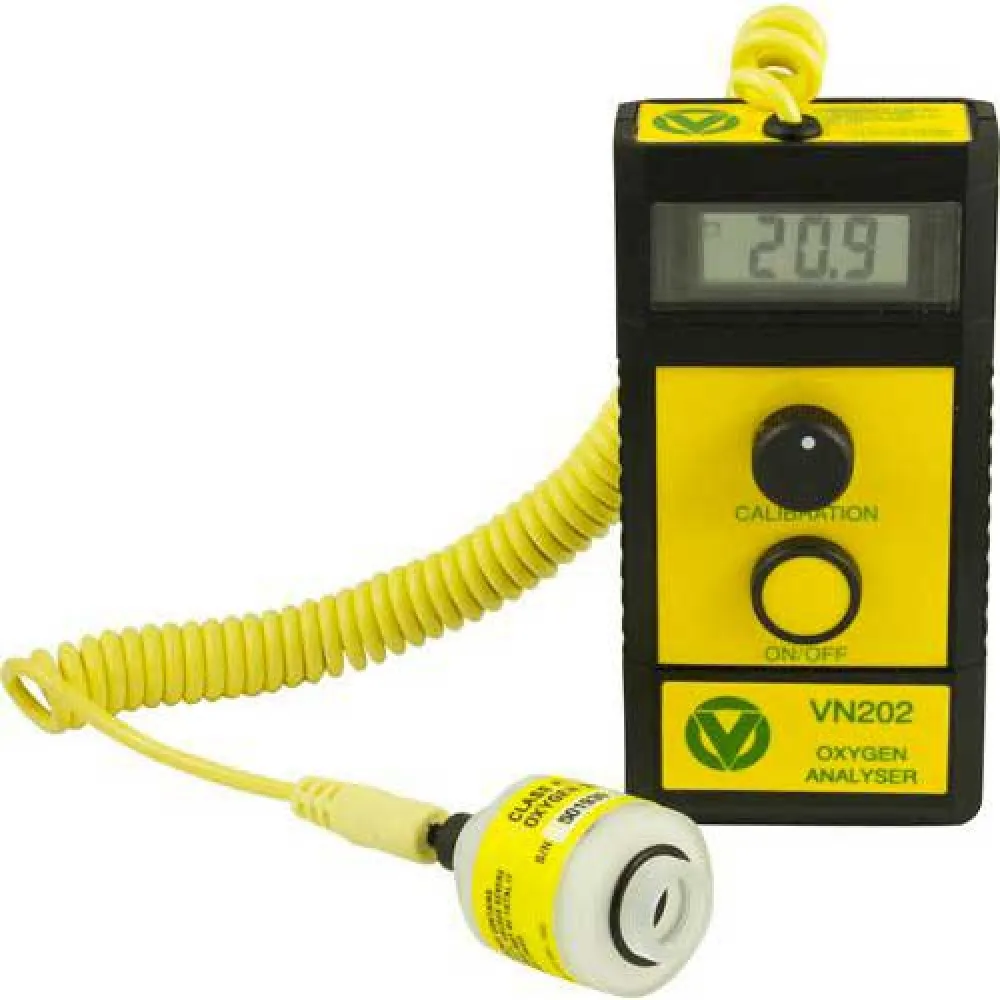
Oxygen sensors used in analyzers are a different situation. In this use, we are almost always analyzing a known gas. We have an expectation regarding what is in the cylinder and are using the analyzer to confirm it. When the analysis of the contents varies from expected by more than 1%, this means you do not know what is in the cylinder and must take appropriate action.
Do not use a sensor that has been mishandled, vacuum packed, frozen, refrigerated, stored in inert gas, stored longer than 36 months, overheated, desiccated, or otherwise abused to determine the oxygen content of an unknown gas.
For diving gas analysis, the slightly slower response of a diving-grade sensor is usually of little consequence. The benefit is that the sensor is more resistant to moisture that may be present on a tank-valve outlet. If the diver or fill station operator fails to wipe or blow away moisture from the valve outlet, that moisture can enter the gas stream being analyzed and affect the accuracy of the analysis.
Some divers and fill stations prefer diving-grade sensors in analyzers because of their moisture resistance. Others prefer analyzer-grade sensors for their slightly faster response time, especially in frequent-use analyzer applications.
Life Extension Techniques
What about using some kind of unproven life-extension technique on oxygen sensors in cylinder-content analyzers? That includes sensor saver caps and similar devices. Recall the large number of factors that affect sensors. Some factors have nothing to do with environmental exposure; they have to do with variations in the manufacturing process.
Two non-environmental factors are the purity of the lead anode and the exact composition of electrolyte. These vary significantly from batch to batch and sensor to sensor. They vary so much that the sensors have a small electronic circuit in them that the factory calibrates in each sensor to produce the final target output millivolt range.
These factors have far more effect on the life of the sensor than any dubious benefit from aftermarket sensor life-extension techniques. Just because someone used a life-extension technique on a sensor and that sensor lasted longer is meaningless. There are too many factors at work to know what effect, if any, the technique had on the life of the sensor. It is a risky practice.
Answers to frequent questions about extending sensor life:
- Vacuum pack your sensor? No. It could rupture the membrane or other seals and might create bubbles in the electrolyte.
- Freeze your sensor? One manufacturer states that freezing a sensor will not, "in general," damage a sensor, but this is not specifically true for diving sensors because of the hydrophobic membrane. Even that manufacturer states freezing will void the warranty, so freezing is certainly not best practice. Regardless, there is no reason to think that freezing will extend the life of the sensor.
- Refrigerate your sensor? Depends on the brand, but no for the Teledyne brand, which specifies a 10 °C minimum, and no would be best practice for all brands. Refrigeration will not significantly extend the life of sensors.
- Store your sensor in inert gas? Best practice would be no. Repeatedly flushing the sensor with inert gas has a risk of affecting moisture content by drying out the sensor. There are also concerns about wake-up time after storage.
- Seal it in a bag or with a cap? Reducing oxygen exposure time might extend the life slightly. However, it probably would not make a significant difference in practice. Remember, some components are aging regardless of being deprived of oxygen, which is why even new, unopened sensors have a shelf life.
Extending the life of an oxygen analyzer sensor is a risk-versus-reward decision. Typical life of an analyzer sensor is somewhere between 24 and 48 months, and I have seen plenty last 60 months and longer. The sensor costs about $100. If you assume an aftermarket process adds one year to the life, you saved only a few dollars and incurred an unknown but significant risk.
Impact and Handling Damage
Oxygen sensors are consumable devices, like batteries, and their service life can vary considerably depending on use, oxygen exposure, and environmental conditions. Physical impact is another important factor. Inside the oxygen sensor are fragile internal connections, seals, and fine conductors. A sensor that has been dropped, shocked, or otherwise mishandled can show high, low, zero, or erratic millivolt output.
This helps explain why a new sensor can occasionally come out of the package dead-on-arrival or unstable. A sensor does not need to look damaged externally to have been damaged internally.
Heat and Sensor Life
Heat has a major impact on the life of oxygen sensors because sensor life can be significantly shortened by excessive exposure to heat. This can happen during shipping or storage, especially in tropical climates, and it can also happen when a rebreather sits in the sun and becomes very hot. Store sensors in climate-controlled room-temperature conditions, typically 20 to 25 °C or 68 to 77 °F.
Keep rebreathers out of the sun both pre-dive and post-dive; an easy solution is to cover the area where the sensors are mounted with a light-colored towel. Likewise, contents analyzers should not be left out in the sun on a boat deck or in a hot car. Treat your rebreather or contents analyzer with respect. Keep it at temperatures you are comfortable in. If you are too hot or too cold, so are the sensors.
Elevated Oxygen Exposure
Another factor that can significantly affect sensor life is the length of time the sensor is exposed to elevated levels of oxygen. This is not really a concern for sensors used in diving gas analyzers, but prolonged elevated oxygen exposure can substantially shorten the life of sensors used in rebreathers. Heavy rebreather use also shortens sensor life. Rebreather divers should take care to always flush their loop with diluent when the unit is not in use.
The most common circumstance is setting up the rebreather a day or two before diving and leaving elevated oxygen levels in the loop following calibration until the unit is actually used. This means the sensors were exposed to very high levels of oxygen for a long period prior to use, and this can shorten the life of the sensors significantly. Best practice is that if your rebreather loop has an elevated PO2 and will not be used for a while, flush the loop with diluent to keep the loop PO2 to a minimum.
Carbon Dioxide Exposure
Carbon dioxide, or CO2, will degrade oxygen sensor function as a result of lead carbonate crystal formation on the cathode, which can permanently degrade sensor output. The implication is that exceeding recommended absorbent duration in rebreather applications might also shorten the life of the oxygen sensors. Breathing on the loop while no absorbent is present is another way the sensor could be degraded.
New Sensor Shelf Life
So what is the shelf life of a new, unopened sensor? Manufacturers specify the shelf life for most types of sensors at 12 or 24 months from date of manufacture, and that is reasonable for sensors intended for use in analyzers. However, I suggest using a fresher sensor in rebreather applications.
For this reason I do not recommend that rebreather divers keep a backup sensor in their spares kit. Rotating a sensor from the spares kit into the rebreather might seem cost effective, but it is not best practice. There are a variety of reasons, but ultimately rattling around in the spares kit is hard on sensors and they often come out of the bag not working well anyway.
If you suddenly need a replacement sensor, they are generally available by overnight delivery. If you feel you must keep a spare unopened sensor for immediate availability, such as during dive travel, I suggest the sensor should be discarded after no more than 12 months.
Notes on Manufacturer Guidance
This article is practical handling guidance, not a replacement for manufacturer instructions. Sensor models, rebreather designs, analyzer designs, and warranty terms vary. When a manufacturer gives a more conservative replacement interval, storage instruction, or handling rule for a specific device, follow the manufacturer’s current instruction for that device.